Compassionate Horse Care
at CARRINGTON STABLES
How we make our small-scale boarding facility a happy, healthy place for horses
Modern equine welfare science shows that horses thrive when their management aligns with their natural behavioral needs as herd-based, movement-oriented grazers. Research in equine ethology and welfare science consistently identifies four key priorities: safety, comfort, social interaction/play, and continuous forage access.
AT OUR FACILITY

SAFETY
Horses are prey animals, and their sense of safety is strongly linked to predictability, visual contact with herd members, and freedom from isolation.
Horses are able to see, hear, and smell other horses, which reduces stress and supports normal herd behavior. Studies show social visibility lowers cortisol (stress hormone) levels in horses.
They have free-choice access between stall and turnout, allowing them to regulate their own environment. Self-directed movement has been shown to reduce stress behaviors and improve welfare outcomes.
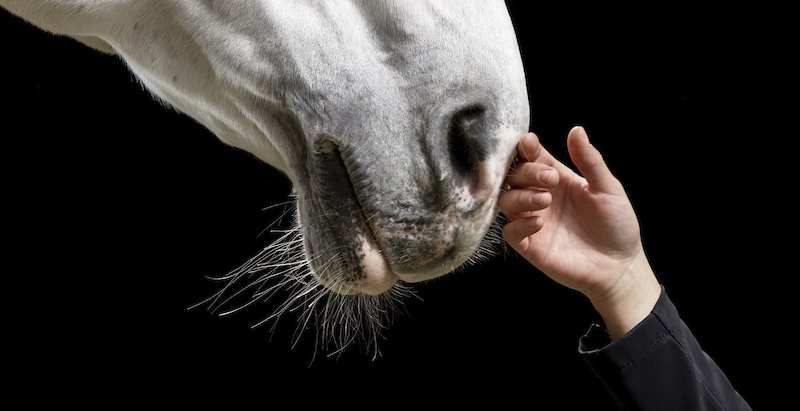
Horses are able to form consistent social bonds with other horses and handlers, which improves emotional security and reduces anxiety-related behaviors.
We schedule quiet, low-disturbance periods in the barn, supporting rest and reducing sensory overload. Research shows that consistent rest periods are important for nervous system regulation and recovery.

COMFORT
Horses are designed to move continuously throughout the day—research suggests they naturally travel 10–20 km per day in free-ranging environments.
Attached paddock-stall systems allow 24/7 movement choice between rest and movement areas. Continuous low-level movement supports:
Digestive health and gut motility
Circulation and lymphatic function
Joint and tendon health
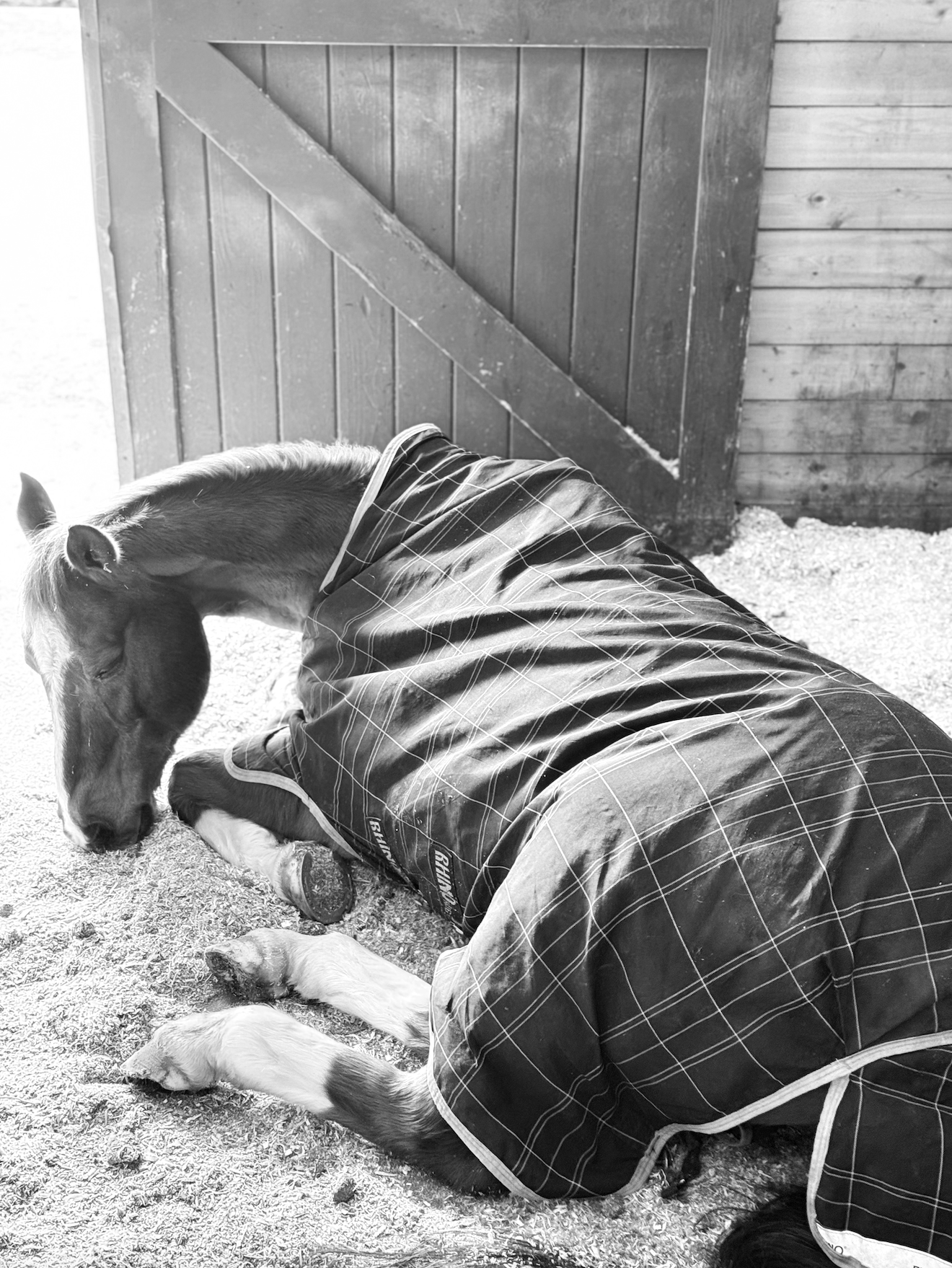
Each stall is fitted with high-quality mats and deep bedding, which research shows increases lying time and improves rest quality. Horses that rest comfortably spend more time in REM sleep, which is essential for recovery.
Stalls and paddocks are cleaned twice daily, reducing ammonia exposure. Elevated ammonia levels are linked in studies to respiratory irritation and reduced lung function in horses.
PLAY
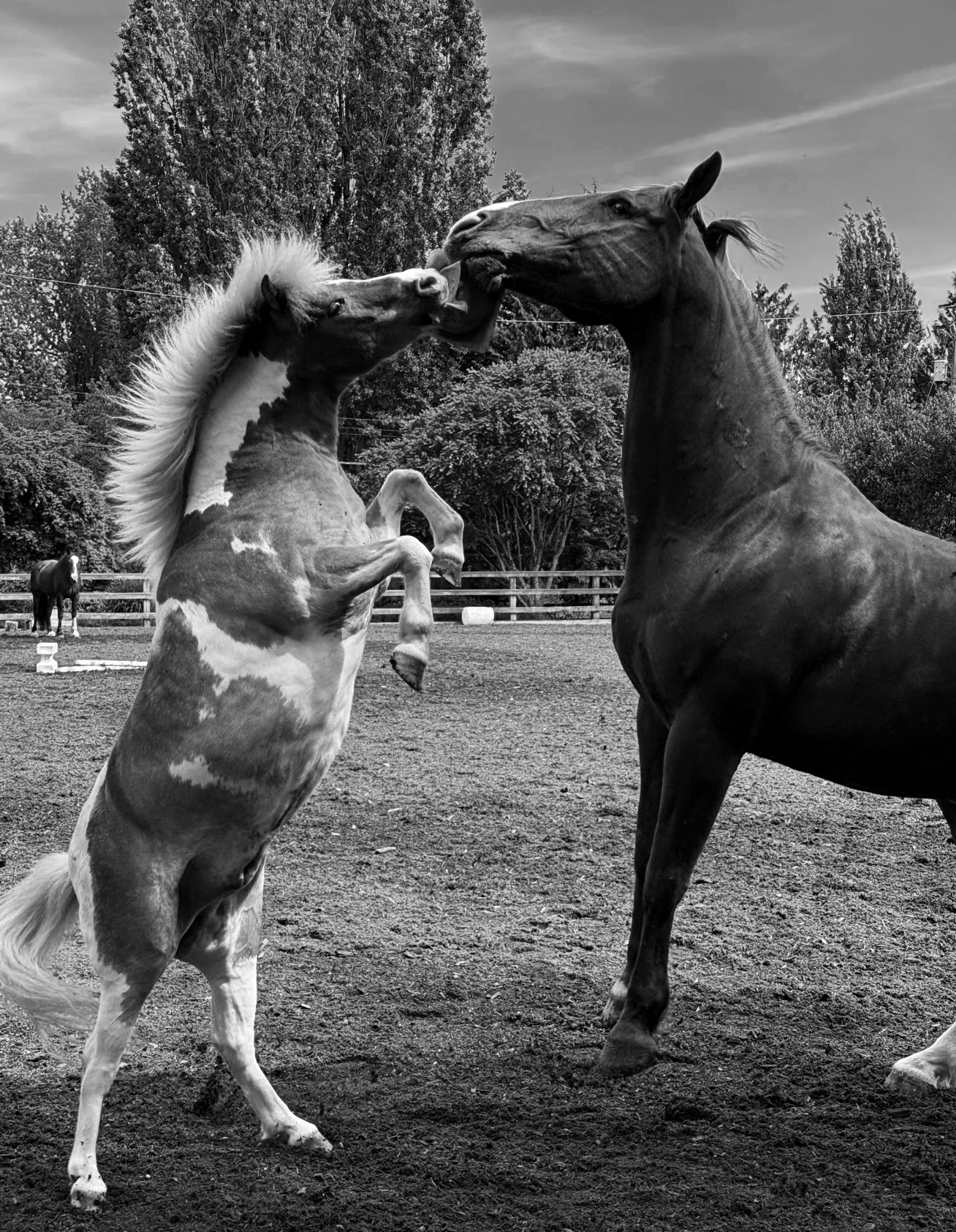
Social interaction is a core welfare requirement for horses. Studies show that social isolation increases stereotypic behaviors (cribbing, weaving), while social housing reduces stress and improves mental health.
Wherever possible, we stable bonded horses adjacent to each other, allowing mutual grooming and social play through safe contact barriers. Mutual grooming is a natural stress-reducing behavior that releases endorphins and strengthens social bonds.
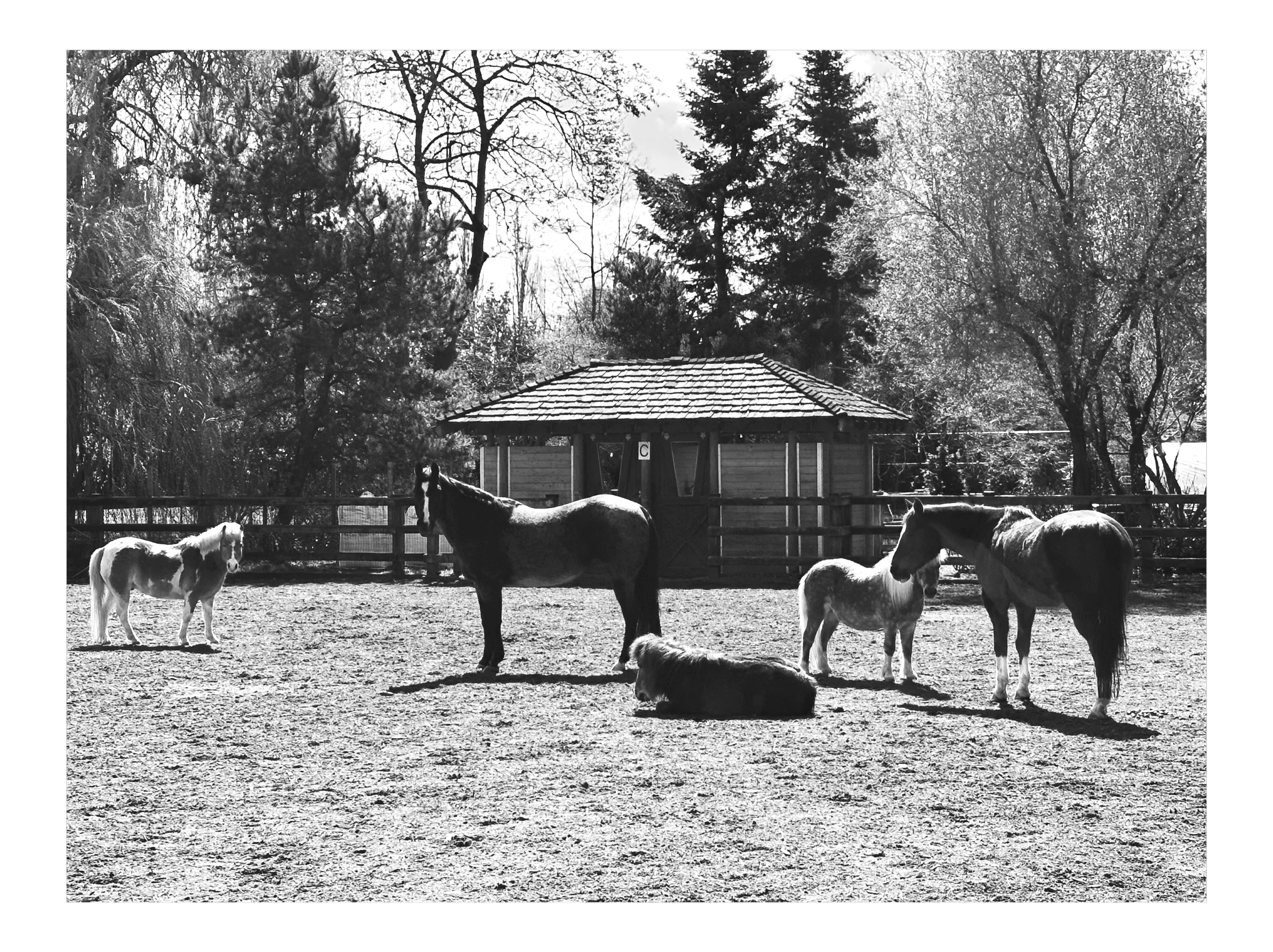
We offer supervised group turnout, ranging from 2 to 7 horses, based on compatibility and safety.
During turnout, horses are able to play, groom, explore, and rest socially, which mirrors natural herd dynamics and supports emotional wellbeing.
Group turnout has been shown in equine research to improve movement, reduce anxiety, and decrease repetitive stable behaviors.
FOOD
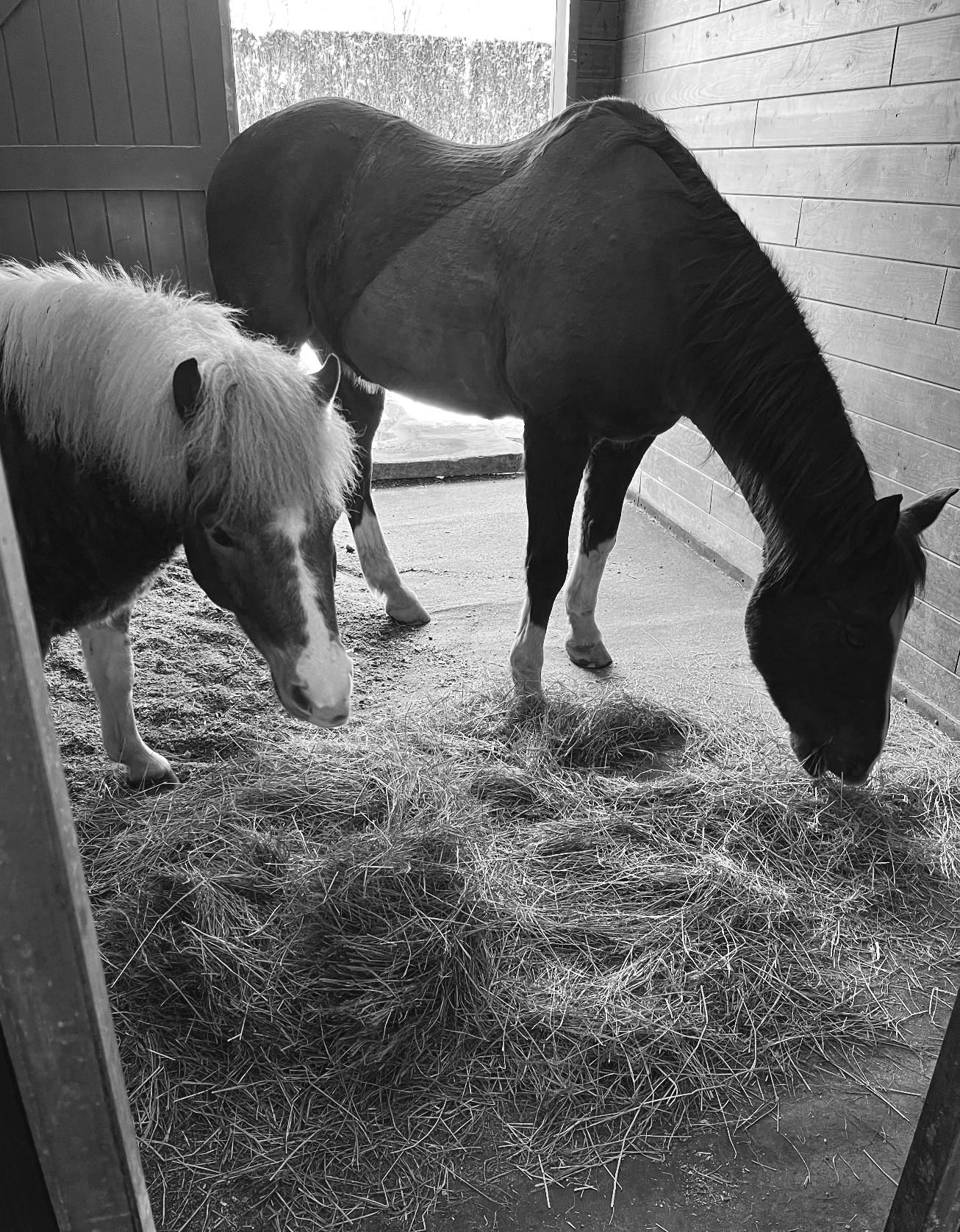
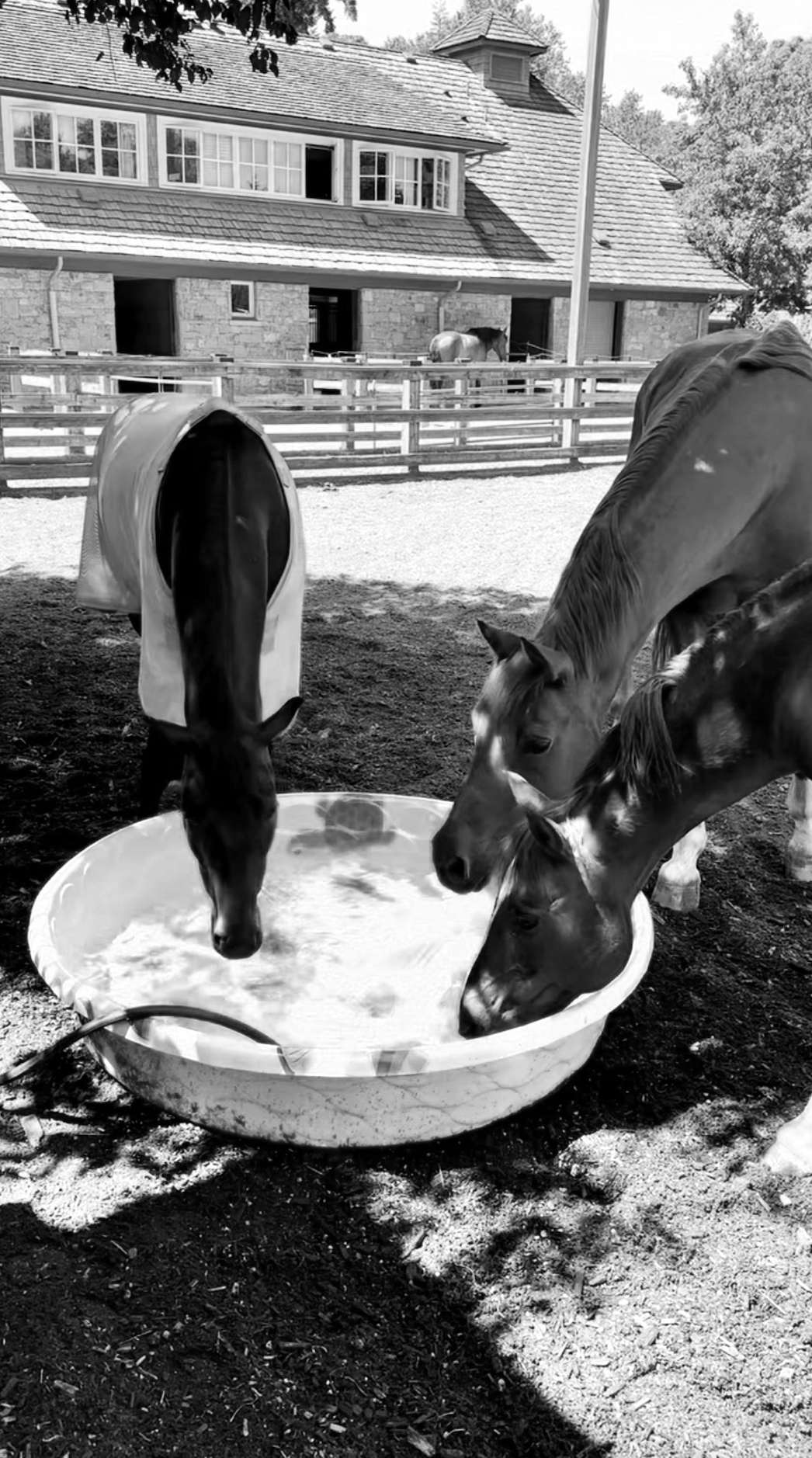
Horses are trickle feeders, designed to consume forage for up to 16–18 hours per day. Long periods without forage increase risk of gastric ulcers and stress behaviors. We provide a variety of tested hay options, including low-sugar forage where appropriate, supporting metabolic health and reducing risk of conditions such as insulin dysregulation and laminitis. Horses have frequent access to forage throughout the day, supporting continuous digestion and reducing time with an empty stomach. Continuous forage intake helps buffer stomach acid and is widely recommended in veterinary nutrition guidelines for ulcer prevention. We feed hay four times daily, maintaining consistent digestive flow while still supporting natural grazing rhythms. A live-in manager provides ongoing supervision and care, ensuring timely feeding, monitoring of health, and immediate response to changes in behavior or wellbeing.